For Immediate Release:
August 29, 2008
Millstone farm joins Monmouth County’s
growing Farmland Preservation Program
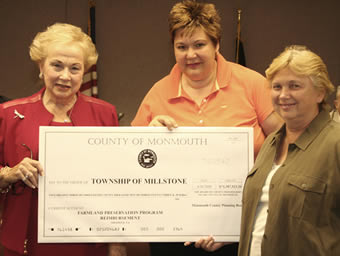
MILLSTONE – The Monmouth County Board of Chosen Freeholders has announced the preservation of the 166-acre Hom vegetable farm on Battleground Road and presented the township with a symbolic $2.3 million reimbursement check for the final share of the farm easement purchase.
“Monmouth County is pleased to be working with such an active farmland preservation partner,” Freeholder Lillian G. Burry said, referring to Millstone officials. “This easement acquisition has helped Millstone reach 1,026 acres of preserved farmlands in the township. While this farm may grow a different crop in the future, we can rest assured that it will never grow houses.”
The check represents the New Jersey State Agriculture Development Committee’s share under its County Easement Purchase Program. The county’s Farmland Preservation Program is overseen by the Monmouth County Agriculture Development Board (MCADB) and is administered by staff of the Monmouth County Planning Board.
The Hom Farm is owned by Wickie and Frank Hom and a farmland easement on the property was purchased in April 2008 for $4,974,840 by Millstone Township. In turn, the township assigned the development rights to Monmouth County under the county’s Farmland Preservation Program. The county’s share of the easement purchase was $955,169.
“Millstone is pleased to be a partner in the county’s commitment to land preservation,” Millstone Mayor Nancy Grbelja said when she accepted the check. “Permanent preservation projects such as the Hom Farm are only possible with financial contributions from open space/farmland preservation funds at the municipal, county and state levels. Preservation monies are an investment in the environmental future of our town, county and region.”
“Millstone sits at the headwaters of major rivers and watersheds,” Mayor Grbelja continued. “The more acres that remain green – as farmland or open space – the more secure our fresh water resources will be.”
Landowners who participate in the program sell the development rights of their properties for a value based on the findings of two independent appraisers. The properties remain in private ownership on the tax rolls, and can be used for any agricultural purpose.
“The contributions from dedicated volunteers at the local level, professional services support by county staff and financial support from the Millstone, Monmouth County and the state of New Jersey all came together to preserve this piece of farmland forever,” Freeholder John D’Amico said.
The Farmland Preservation Program has enabled the landowner to take equity from the family farm and, at the same time, address tax issues that might have prevented the farm from being transferred to future generations. The farm grows Asian vegetables.
The Monmouth County Board of Chosen Freeholders currently provides financial resources in support of farmland preservation efforts in 10 municipalities. Those municipalities comprise most of the county’s remaining farmland and its overall land base. The county is committed to continuing this partnership, recognizing that time is of the essence in protecting this rapidly disappearing resource.
“Each piece of land we preserve helps protect the quality of life in Monmouth County, now and in the future,” Freeholder Burry said. “We continue to move above the 20 percent mark of permanently preserved Monmouth County land because of great cooperative efforts like this one.”
A total of 154 farms covering 11,846 acres have been preserved in Monmouth County.
# # #
# # #